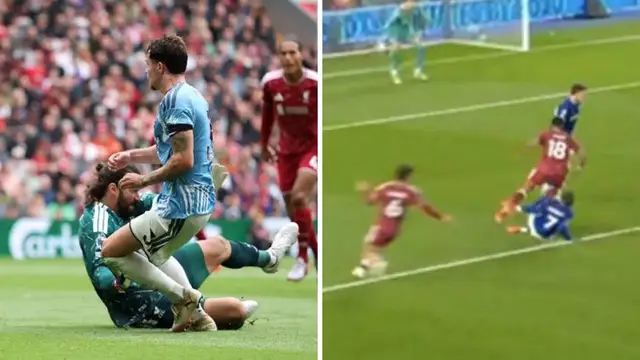

Liverpool left Portman Road with a clean 2-0 win, a dominant display, and another strong showing from Cody Gakpo. Yet one moment refused to leave the conversation.
Gakpo drove into the Ipswich box, beat his man, released the ball, and then went down under contact from Abdul Fatawu Issahaku. Referee Darren England waved play on. No penalty. No VAR check of any substance. End of discussion.
Seven days earlier, almost the reverse had happened. Alisson made contact with an opposing player inside the penalty area. A penalty was given, VAR backed it, and Morgan Gibbs-White scored. The official line was that there was “sufficient contact.”
Same basic ingredients—contact inside the box between goalkeeper/attacker and defender—yet opposite outcomes. Liverpool supporters are entitled to ask the obvious question: what, precisely, was the difference?
Context matters, but consistency matters more
Gakpo was already inside the area when the challenge arrived. He got the pass away first, then went to ground. The incident occurred close enough to England that the referee had a clear view. That does not automatically make it a penalty. Not every touch in the box is a spot-kick, and the game is better when referees do not award soft ones.
The problem is not that one decision was harsh or lenient in isolation. The problem is that the threshold appears to move. If the contact on Alisson was enough to meet the bar last weekend, the contact on Gakpo should at least have triggered a serious look. Instead, it was waved away without apparent scrutiny.
VAR was introduced to reduce the most obvious errors and impose a more uniform standard. Years later, the same debates keep returning because the standard still feels subjective and club-dependent. When a decision goes against Liverpool one week and a near-identical one is ignored the next, trust evaporates.
There was a later VAR intervention in the Ipswich match when Dominik Szoboszlai went down and a penalty was initially awarded, only to be overturned for a marginal offside in the build-up. That at least showed the system can act. It simply chose not to act on the Gakpo incident.
The wider pattern
This is not an isolated grievance. Liverpool fans have watched enough borderline calls go against them, and enough similar ones go the other way, to detect a pattern. Whether the pattern is real bias or simply human inconsistency dressed up as technology is almost beside the point. The perception is damaging.
Darren England’s involvement will only heighten the sense of grievance for some supporters, given previous high-profile errors involving Liverpool. But the deeper issue sits above any single referee. PGMOL continues to insist that VAR produces greater consistency while delivering outcomes that look anything but consistent to the people watching every week.
Perspective
Liverpool won the match. Gakpo was excellent. The three points matter more than any single non-call. No serious supporter should pretend a soft penalty is automatic every time a player feels contact. Football is not designed to be sterile or perfectly fair, and constant forensic examination of every touch can kill the game’s flow.
Yet the league and its officials cannot have it both ways. They cannot sell VAR as the solution to inconsistency and then apply different standards to near-identical incidents a week apart. If contact of the kind Alisson was penalised for is enough, then contact of the kind Gakpo received deserves the same scrutiny. If it is not enough, then the Alisson penalty should not have stood either.
Until that line is drawn clearly and applied evenly, the arguments will continue—and the credibility of the system will keep eroding.
Liverpool move on with the win. The questions about refereeing remain.